Introduction
If you’re juggling multiple projects—at work, school, or in your creative life—keeping your notes organized can get tricky. A common struggle is whether to keep everything in one notebook (maybe in neatly divided sections), or to pick up a dedicated notebook for each project. Both methods have real advantages and frustrations. There’s no universal best way, but there are practical strategies for choosing (and using) a system that won’t leave your notes scattered or your brain overloaded.
This guide cuts through the uncertainty, drawing on approaches shared by people who rely on notebooks every day—professionals, writers, students, and stationery fans.
Why This Matters
When you’re dealing with overlapping meetings, ideas that arrive at inconvenient moments, and dozens of details that need to be captured before they’re forgotten, a reliable notebook system becomes essential. But if your notes are in the wrong place—or if you can’t remember where to put new ones—system overwhelm creeps in. Before you know it, you’re flipping through pages or hunting for lost pages in your bag, instead of moving your projects forward.
The Two Main Approaches: One Notebook vs. Several
The choice really boils down to two styles:
- Keep everything in one notebook, with some kind of internal organization
- Use a separate notebook (or binder) for each project or area
Let’s look at the pros, cons, and the situations where each approach shines—or falls flat.
One Notebook for Everything
How this works
- All notes, tasks, and ideas go into a single notebook
- Organization can be chronological (just write as you go), sectioned (split into zones), or hybrid (most notes are chronological, with some space reserved for references or special pages)
Advantages:
- Only one thing to carry or find
- Nothing gets forgotten just because you picked up the wrong notebook
- Simplicity: no mental overhead wondering which notebook to grab
- Good for people whose projects are closely related, frequently overlap, or don’t have sharply defined boundaries
Drawbacks:
- Unrelated notes can get jumbled together, making it hard to locate what you need later
- One project’s brainstorm can interrupt a critical meeting note from another area
- Chronological layouts rely heavily on a good index or table of contents system—easy to neglect
- The fuller the book, the harder it is to quickly reference older content
- If the notebook is lost or unavailable, everything is inaccessible
Who tends to prefer it:
- People juggling smaller, short-term projects
- Those who work in bursts and don’t want to micro-manage which notebook to use
- Anyone with a central routine (daily, weekly reviews) that keeps notes flowing
Several Notebooks: One per Project or Context
How this works
- Each major project, area, or long-term goal gets its own physical notebook
- Could be a stack at your main workspace, or just two—work and personal
Advantages:
- Keeps project notes together; everything related to Project A is in Book A, and so on
- Promotes focus: picking up a notebook switches your mindset to that project
- Easier for long-term or complex projects where notes add up over months or years
- If you hit a creative or administrative block on one project, you can leave its notebook aside without cluttering the others
- Reduces accidental context-shifting—less temptation to start working on the wrong thing
Drawbacks:
- Easy to forget to bring the right notebook (especially if your work is mobile)
- Ideas that cross projects might get lost or require duplication
- More physical bulk, especially if each project requires frequent update
- If you move between locations, it’s hard to travel with many notebooks
- If a project is small or short, a whole notebook may go half-empty
Who tends to prefer it:
- Writers, researchers, and creatives with long-running or deeply immersive projects
- Professionals handling unrelated workstreams
- Anyone responsible for confidential or compartmentalized topics (e.g., client notebooks)
- Students in subjects where each class or paper is its own world
Practical Hybrid Approaches: Mixing the Methods
Many people fall somewhere in between. Here are proven hybrid approaches:
One Primary Notebook, Plus Dedicated Project Books
- Keep a general notebook or planner for day-to-day notes, tasks, ideas “in the moment”
- Use separate notebooks for in-depth work on big projects that generate lots of material (full story planning, academic research, product launches)
- When a smaller project starts growing—or if you repeat a work process often—move recurring material to its own book
Sectioning a Single Notebook
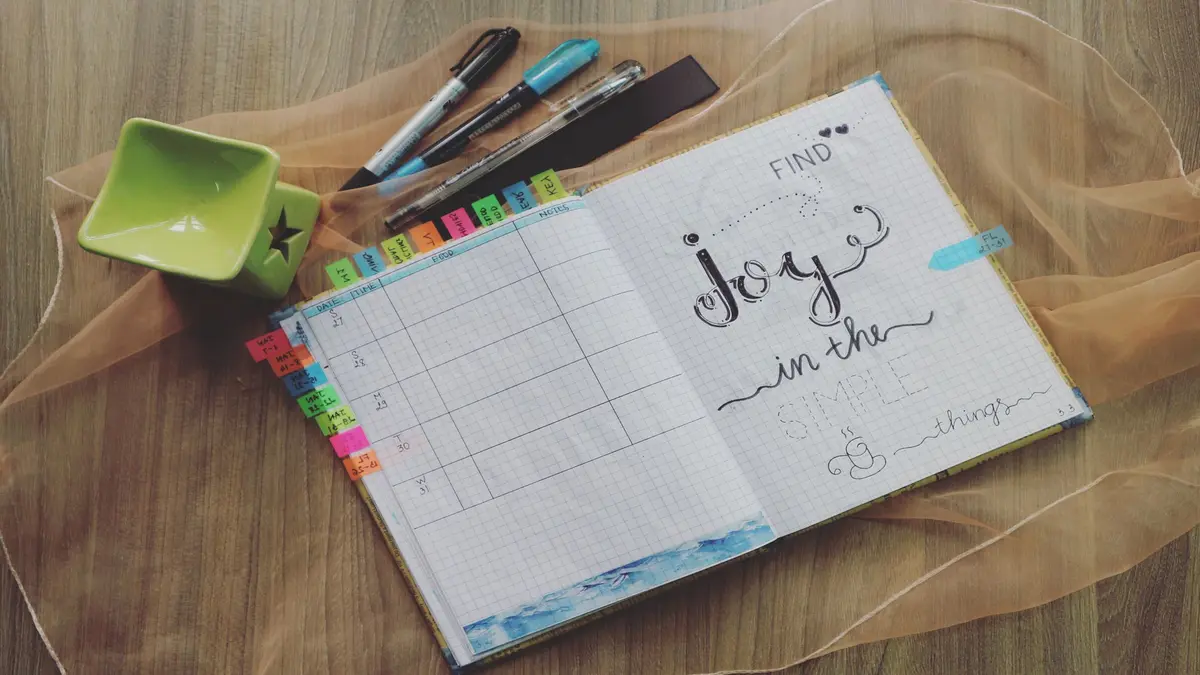
- Use page tabs, sticky bookmarks, or color-coded sections to carve out zones for key projects within one notebook
- Number every page and maintain an index or contents at the front, listing projects and where their pages start
- Leave space between sections to allow for uneven growth
- Color code headings or margin tags for instant visual cues
Notebooks Plus Digital Support
- Use notebooks for all creative/work content, but supplement with digital lists/indexes for easier search
- Photograph pages you want backed up or referenced digitally
- Keep a digital “master index” listing where key notes or collections are located, across multiple notebooks (Ryder Carroll’s approach in the Bullet Journal community)
When to Use a Project-Specific Notebook
According to users across writing, project management, and stationery communities, a separate notebook shines when:
- The project is complex, will last months or longer, and will generate a lot of material
- You need a comprehensive record of decisions, research, drafts, and reflections (as in research, writing a book, or running a campaign)
- You want to preserve the evolution of a big idea without distractions from unrelated notes
- Formal boundaries matter (e.g., work vs personal, or confidential/client-based material)
- You want each project to feel “contained” and easy to hand off or archive when done
Conversely, for short-lived or less critical tasks, piling everything into one book is simpler and avoids a stack of half-used notebooks.
Tips for Organizing Any Notebook System
No system works without some structure. Whether you use one notebook or many, real users recommend:
Number Pages and Use an Index
- Number every page as you go, or choose a notebook with pre-numbered pages
- Reserve the front pages for an index or table of contents
- Whenever you switch projects, start a new index line with project name and starting page
Compartmentalize: Tabs, Sections, Colors
- Use sticky tabs or ribbon markers for fast sectioning
- Color code: different ink, highlighters, or margin marks per project
- Use washi tape or large stickers at section edges for easy thumb navigation
Keep Your System Simple Enough to Maintain
- Don’t overcomplicate splits or color codes—if your system takes more time than it saves, you’re less likely to keep it up
- If a sectioned notebook leaves you with blank pages in slow areas, use sticky notes or move to a hybrid method
- Review and update your index or table of contents regularly; don’t let it slide
Combine Paper and Digital (When Helpful)
- Digital calendars and reminders can supplement paper notes for due dates and cross-referencing
- Take quick phone photos of critical pages to access them on the go
- Use a shared digital doc or table if several people need to access or update project notes, reserving paper for private or personal thinking
Common Mistakes and How to Avoid Them
- Starting without a clear purpose: Decide what your books will hold before you start writing. It’s easier to set up sections or split notebooks at the start than after pages are filled.
- Cramming unrelated projects together because you ‘only need one notebook’: This leads to frustration when searching for notes weeks or months later.
- Buying too many notebooks at once (and not using them): Start with the minimum that fits your needs—it’s easy to expand as you learn what works.
- Forgetting to update your index: Then you end up flipping through dozens of pages to find what you need. Make updating the index a weekly habit.
- Letting unused sections fill with blank pages: If one area outgrows the others, consider switching to a binder or modular ring system for extra flexibility.
Examples of Real-World Setups
Scenario 1: A Professional with Multiple Clients
- Uses one notebook per client for meeting notes, decisions, and project logs
- Maintains a small central notebook for day-to-day to-do lists and time tracking
Scenario 2: A Student with Four Classes
- Uses a large notebook with color-coded sections, each labeled for a different class
- Leaves 5–10 pages between sections to allow for uneven note volume
- References all note locations in a master index at the front
Scenario 3: A Writer Drafting Multiple Books and Essays
- Drafts are written in project-specific notebooks
- A separate ideas notebook captures random thoughts, snippets, and research leads before sorting them into the right book
- Digital backup by snapping photos of completed pages
Binder, Disc, and Modular Notebook Options
If your projects require even more flexibility, modular notebooks or small ring binders may help:
- Move and reorganize pages without rewriting notes
- Add or remove sections as a project changes
- Still possible to use tabs, section dividers, and physical labels
Popular systems (e.g., Plotter, William Hannah) work especially well for active projects that expand over time.
When Sticking to One Notebook Makes Sense
- Your projects are small or closely related
- You tend to finish one major project before starting another
- You dislike carrying multiple items or live in one main workspace
- You want everything at hand all the time, and are diligent about indexing
When Multiple Notebooks Are Worth the Extra Effort
- Projects have little overlap—mixing content causes more confusion
- You have privacy or ownership concerns (especially with work/private life)
- One or more projects will last longer than a single notebook’s typical lifespan
- Dedicated notebooks help you mentally “switch on” for specific work
The Bottom Line
There’s no universally perfect answer—what matters most is creating a system that helps you get notes out of your head and makes information easy to find later. Don’t be afraid to experiment. Many people tweak or switch their system as their workload evolves.
Start simple, adjust as you go, and don’t overthink it. If at any point you start feeling lost in your notes, it’s time for a quick review and maybe a minor overhaul of your notebook setup.