Why Notebook Condition Matters
If you use notebooks for work, journaling, planning, or any sort of note-taking, you’ve likely run into damage: creased covers, bent pages, coffee stains, or worn-out bindings. This isn’t just an issue of appearance—damaged notebooks can make it harder to keep information organized, look messy in professional settings, and may even put important notes at risk. Luckily, a few straightforward care habits can make your notebooks last a lot longer and look much better, whether you’re carrying them around, storing them at home, or archiving your work.
Common Causes of Notebook Damage
Notebooks wear out for a few main reasons:
- Getting bent or crushed in a bag or backpack
- Liquid spills (coffee, water, rain)
- Scuffed or torn covers from rough handling
- Pages curling, wrinkling, or falling out
- Overstuffing with loose notes and papers
Knowing what typically ruins notebooks is the first step to protecting them.
Choosing a Notebook That Lasts
Your notebook’s durability starts with what you buy. If you often carry your notebook around or expect it to last a long time, look for:
- Hardcover or sturdy covers: Protects better than thin flexible covers.
- Water-resistant or laminated surfaces: Offers some protection from light spills.
- Spiral vs. stitched binding: Stitched bindings hold together well over time, but spiral notebooks open flat and are less likely to have pages fall out.
- Thick, acid-free paper: Acid-free paper holds up longer and is less likely to yellow or become brittle, especially if you’re archiving notes.
How to Protect Your Notebook On the Go
Use a Sleeve or Protective Cover
The single biggest difference for portable notebooks is a protective sleeve or case. These come in soft fabric, sturdy plastic, or even padded options. Key benefits:
- Prevents covers and corners from bending or scuffing in your bag.
- Keeps pages from wrinkling or bending.
- Reduces the risk of spills or rain ruining your notes.
- Some have space for pens, sticky notes, and extra loose sheets.
Many users report that a zippered pouch, packing cube, or dedicated book sleeve (even the ones designed for tablets) works well. If you carry multiple notebooks: look for expandable cases.
Pack Carefully in Your Bag
How you pack your bag matters just as much as what you pack it in:
- Pack heavy items at the bottom, notebook(s) on top.
- Stand notebooks vertically inside your bag, spine down if there’s room. This reduces pressure on the binding and pages.
- Don’t overfill your bag. Overstuffed bags bend and crush notebook corners.
- Avoid putting food, drinks, or sharp objects next to notebooks.
Choose the Right Bag
If you regularly carry books or notebooks, a backpack with padded compartments is ideal. Look for:
- Padded or divided sections, which reduce pressure and impact.
- Water-resistant outer material to prevent rain and spills.
- Wide, sturdy straps to distribute weight evenly and keep notebooks from getting crushed in a sagging bag.
Daily Habits to Reduce Wear
A lot of notebook damage happens little by little. Small changes in how you use your notebooks really do add up.
- Close your notebook before putting it away—this keeps pages flat and the structure tight.
- Use the elastic band or closure (if available) to prevent the pages from opening and getting wrinkled or damaged.
- Keep your hands clean when writing. Dirt and oil leave permanent marks and gradually discolor pages.
- Avoid eating or drinking directly above your notebook.
- Use bookmarks or tabs instead of folding page corners.
- Don’t overstuff with loose papers or clippings. If you need to carry extras, use pockets or slips, or keep a folder in your bag.
At-Home and Desk Storage
Where and How to Store Notebooks
Storing notebooks properly can make a big difference, especially if you’re keeping them for years.
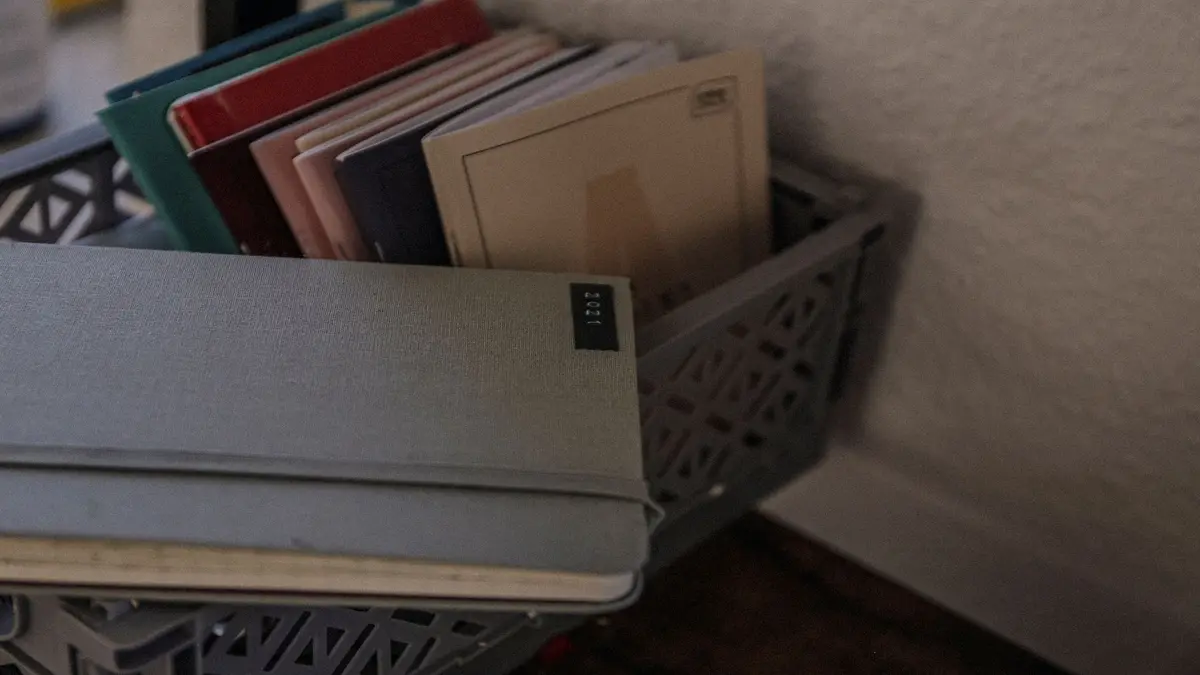
- Keep notebooks upright on a bookshelf, not leaning or stacked haphazardly. If storing upright, use bookends to keep them from slanting.
- Avoid tightly squeezing them together. There should be enough room to easily slide one out.
- If storing flat, stack largest notebooks at the bottom, not higher than about 12 inches.
- Store in a cool, dry, dark place. Humidity leads to curling, warping, and mold; light causes fading.
Protect from Light, Heat, and Moisture
- Keep notebooks away from direct sunlight (windows, lamps). UV exposure fades covers and pages.
- Don’t store on or directly against concrete floors or outside walls. Moisture seeps up and can cause warping or mold; store on a shelf at least four inches above the floor.
- For long-term archival, use acid-free boxes or containers. Simple cardboard boxes work as long as they’re new, acid-free, and not exposed to basement or attic dampness. Specialized plastic bins (polypropylene, polyethylene) can keep out insects and moisture.
- Consider moisture-absorbing packets (like silica gel) for long-term storage, especially if you live somewhere humid.
Regular Care
- Dust covers every now and then with a soft, dry cloth.
- Avoid using cleaning sprays or wet wipes.
- Label notebooks clearly (use a marker or sticky label) if you have a lot or tend to lose track of content. This prevents accidental loss or misuse (especially at school or offices).
Special Tips for Spiral Notebooks
- Avoid overstuffing with papers or sticking bulky items inside; this can warp the coil and covers.
- Don’t fold the cover back on itself excessively, as this stresses the binding. When possible, close the notebook flat.
- If storing for a long time, stand spiral notebooks upright, just like regular books. This helps keep the spine from deforming.
- Use built-in storage pockets for loose sheets rather than overfilling the main section.
What to Do If Your Notebook Gets Wet or Damaged
- If a spill happens, separate wet pages carefully and blot (don’t rub) with a dry paper towel.
- Air-dry gently, using a fan if needed. Don’t use a hair dryer or heater; this may warp pages further.
- Small tears can be taped with clear archival tape, but avoid using everyday cello tape on pages you want to last.
- Repair scuffed or peeling covers with book tape or a fabric patch if cosmetics matter to you.
Archiving Notebooks for the Long Term
If you want to save filled journals or notebooks for years—either for personal history, research, or creative work—archival habits come into play.
- Use acid-free, lignin-free boxes or folders to store important notebooks. Avoid old cardboard or musty shelves.
- Vacuum-seal or wrap in ziplock bags to prevent humidity damage, especially if you’re storing in a basement or attic (though be careful with plastic bags and heat exposure in some environments).
- Store notebooks off the ground and away from exterior walls to guard against flooding and mold.
- Digitize notes if you’d be heartbroken to lose them—for backup, not as a replacement for careful storage.
- Label each notebook and storage box with date/subject.
Mistakes and What to Avoid
- Don’t leave notebooks loose in open bags; slipping around is the fastest way to bend corners.
- Don’t store notebooks somewhere hot, damp, or with fluctuating temperatures. Attics and basements are risky unless temperature and humidity are controlled.
- Don’t press too hard while writing; this ribs the paper, especially in thinner notebooks, making indentations on the following pages.
- Don’t use cheap, acidic sticky notes or tape inside notebooks you want to keep for decades; these can stain or degrade pages over time.
Quick Tips Checklist
- Sleeve or protective cover for travel
- Close elastic or magnetic closures when not in use
- Store upright on shelves, not squashed or exposed to light
- Avoid stacking heavy objects on notebooks
- Keep away from food, drinks, and direct heat
- Archive in acid-free boxes in a dry, dark place
- Regularly dust and label for organization
Final Thoughts
Taking a few small steps—like using a protective cover, packing carefully, and storing in the right spot—goes a long way in keeping notebooks in good shape. While a little wear and tear is normal, following these habits will help your notebooks stay tidy, organized, and usable for as long as you need them.