Finding the Right Pen for Note-Taking
A lot of people struggle to find a pen that’s actually comfortable, reliable, and fits the way they write. Whether you’re jotting down points at work, taking notes in class, or journaling in the evening, the wrong pen can mean smudged ink, tired fingers, or just never quite getting the feeling you want. But there isn’t a one-size-fits-all answer: what works perfectly for one person might frustrate another. Below is a practical, honest comparison of the most common pen types for note-taking, with real models people actually use, why they’re chosen, and the trade-offs you need to know about.
Gel Pens
Gel pens are popular for a reason: their ink is vibrant, their lines are crisp, and they tend to glide more smoothly than ballpoints. Brands like Pilot G2, Uni-ball Signo, and Zebra Sarasa constantly appear in user favorites and expert lists.
Strengths:
- Rich, vivid ink colors
- Smoother writing than most ballpoints
- Many tip sizes (from 0.28 mm to 1.0 mm)
- Good control for both block printing and cursive
Drawbacks:
- Some gel inks will smudge, especially if you’re left-handed or write quickly
- Ink runs out faster than with ballpoints
- Can skip on very smooth/slick paper
Popular Models:
- Pilot G2 – Widely available, does what it says: smooth, reliable, and comes in lots of tip sizes and colors. Many students and professionals keep these for everything.
- Uni-ball Signo DX (UM-151) – Consistently rates as the micro-tip gold standard for neat notes and small writing.
- Zebra Sarasa Clip – Known for a positive, clicky feel and quick-dry ink, which is great for people who take fast or color-coded notes.
- Pentel EnerGel – Almost legendary among left-handers for its fast-drying, low-smudge formula.
Who Should Choose Gel:
- Anyone who likes a bold line and doesn’t need to worry about notes getting wet
- Students who want to color-code
- People who enjoy a bit of flair or art in their notes
Tips:
- If you’re left-handed, try the Pentel EnerGel or Zebra Sarasa, both praised for their quick-dry capabilities.
- For tiny planners, the Uni Signo 0.38 mm is hard to beat for fitting small handwriting into tight spaces.
Ballpoint Pens
Ballpoints have been everywhere for decades. Standard office pens like the Bic Cristal, Paper Mate InkJoy, and mid-tier options like the Uni Jetstream are designed for functionality, not flash. Their oil-based ink dries quickly almost anywhere and the refills last ages.
Strengths:
- No smudging—dry time is nearly instant
- Great compatibility with cheap paper (think handouts or office copies)
- Usually last longer than gel or rollerball refills
Drawbacks:
- Can feel “scratchy” or require pressure, leading to hand fatigue in long sessions
- Colors are less vibrant than gel/rollerball ink
- Cheap models can skip or blob
Popular Models:
- Uni Jetstream – Notable for its low-viscosity “hybrid” ink that’s smoother than your average ballpoint. Highly recommended for its comfort and fast drying, making it lefty-friendly.
- Pilot Dr. Grip – Designed specifically to reduce hand strain with a wide, cushy grip; excellent for long meetings or marathon note-taking.
- Bic Cristal – The classic; loved by many for its dry, even lines and unbeatable value. It’s basic, but it works.
Who Should Choose Ballpoint:
- Anyone who takes notes on random, rough, or lower-quality paper
- People who write fast and want instant drying
- Left-handed writers tired of smudges
Tips:
- If your hand cramps, look for ergonomic models like Pilot Dr. Grip or Uni Jetstream with a soft grip.
- Ballpoints are ideal for everyday work tasks—just don’t expect the bright pop of a gel pen.
Rollerball Pens
Rollerballs bridge the gap between ballpoint and gel, using a water-based ink that flows more freely. This means they glide across the page with less effort, but they can sometimes bleed or smudge, depending on the paper.
Strengths:
- Extremely smooth writing experience
- Nice, saturated ink colors
- Less hand fatigue thanks to lighter pressure needed
Drawbacks:
- Prone to bleeding through thin paper
- Can smudge, especially for quick note-takers or lefties
- Cap-style models can dry out if left uncapped
Popular Models:
- Pilot Precise V5 (or V7) – Prized for its clean, sharp lines and comfortable writing, popular for detailed or small handwriting.
- Uni-ball Vision Elite – Respected for its anti-leak design, even on airplanes, and a smooth writing feel.
- OHTO GS02 Roller Gel Pen – Combines rollerball smoothness with a quick-drying, stable gel ink.
Who Should Choose Rollerball:
- People who want the smoothest writing possible (notes, signatures, drawing diagrams)
- Anyone who prefers bold, dark lines
Tips:
- Avoid on the cheapest or thinnest paper—rollerballs often bleed through.
- For left-handed writers, seek out quick-drying models or stick to smaller tip sizes (finer lines = less wet ink).
Fountain Pens
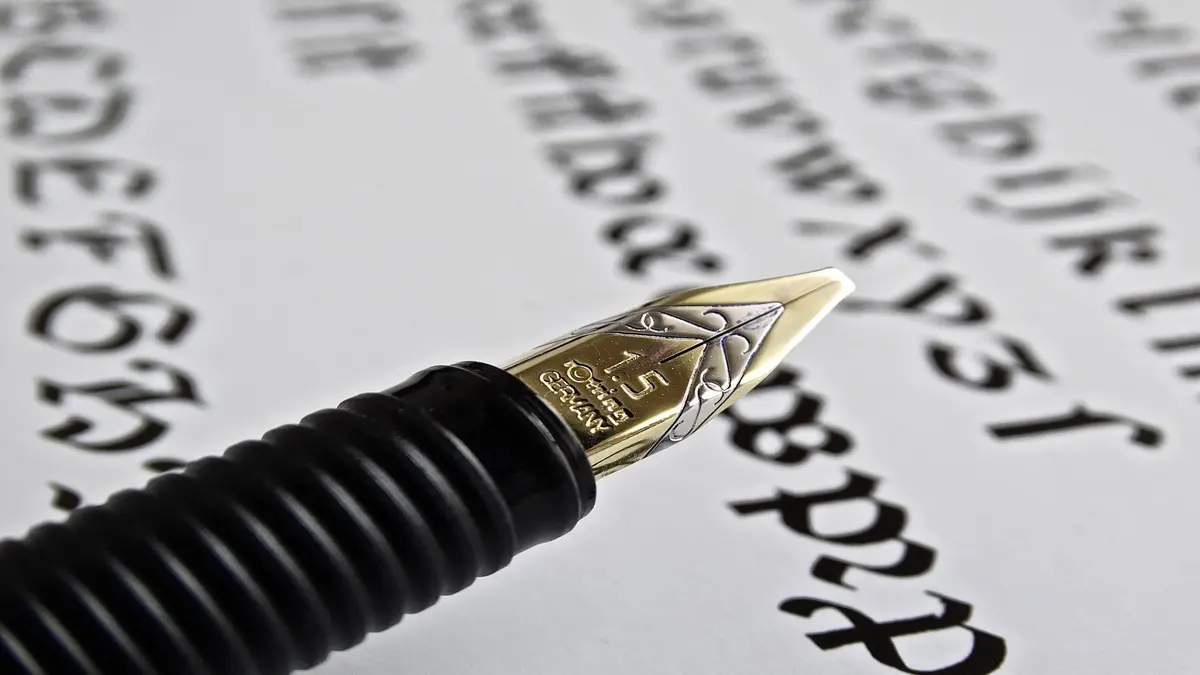
Fountain pens aren’t just for enthusiasts and calligraphy fans—they’re excellent for extended writing because they let the ink flow with minimal pressure. This can genuinely reduce hand fatigue during long blocks of note-taking, and your handwriting may even improve.
Strengths:
- Require less force to write; good for reducing cramps
- Refillable, so long-term cost can be lower
- Personalized feel depending on nib
- Encourages slower, neater writing (for some, this is a plus)
Drawbacks:
- Can take practice to master — not always “grab and go”
- Ink may dry slowly and can smudge, especially on regular office paper
- Risk of bleeding/feathering on lower quality paper
- Maintenance (cleaning, refilling) needed
Popular Models:
- Pilot Metropolitan – Highly recommended entry-level fountain pen; affordable, reliable, and easy to start.
- Platinum Preppy/Prefounte – Popular for beginners thanks to low price and replaceable cartridges.
- Lamy Safari – A favorite for students and anyone new to fountain pens, with a wide grip and a range of nib sizes.
- Kaweco Sport – Compact, travel-ready option that fits in pockets and planners.
Who Should Choose Fountain Pen:
- Those who write for long periods and struggle with hand discomfort
- Writers who don’t mind a bit of setup/maintenance in exchange for a more pleasant note-taking experience
- People who want to experiment with different ink colors and nibs
Tips:
- Choose a fine or extra-fine nib (especially for taking notes on standard notebooks or planners)
- Use fountain pen-friendly paper (like Rhodia, Midori, or Leuchtturm1917) to avoid bleeding and feathering
- Practice before using a fountain pen in high-speed settings until you’re comfortable
Smudging, Hand Fatigue, and Paper Compatibility
Certain issues come up again and again when people hunt for their perfect pen:
- Smudging: Gel and rollerball pens (except quick-dry models) are most at risk. Ballpoints and certain fast-dry gels like Pentel EnerGel are safest. Fountain pens are tricky—only some inks and papers dry fast.
- Hand fatigue: If your hand hurts during long sessions, try pens with lighter ink flow (fountain, rollerball) or ergonomic designs (Pilot Dr. Grip, Uni Jetstream Alpha Gel Grip).
- Paper problems: Cheap, thin, or “toothy” paper causes bleeding, feathering, or skipping for many pens. Ballpoints work almost everywhere. For gel and fountain pens, use good notebooks (e.g., Midori, Maruman, Rhodia, Leuchtturm1917) for cleaner results.
Matching Your Writing Style
- Fast writers: Ballpoints and fast-dry gels (e.g., Pentel EnerGel, Zebra Sarasa Dry) help avoid smearing.
- Left-handed writers: Quick-dry gel or ballpoints are safest. Pilot G2 and Bic Cristal are common choices, but many lefties love Pentel EnerGel, Zebra Sarasa Clip, and Uni Jetstream for smudge-resistance.
- Fine, tiny, or detailed notes: Use micro-tip gels (Uni Signo DX 0.38 mm, Zebra Sarasa Clip 0.4 mm) or needle-tip rollerballs (Pilot Precise V5). For planners, needle-point keeps things crisp and avoids crowding.
- Block letters, bold and big: Use 0.5 mm+ tips or thicker rollerball/gel models.
- Long sessions: Try ergonomic ballpoints, or switch to a fountain pen with a light, cushioned grip to reduce ache.
Quick Table: Pen Types at a Glance
| Pen Type | Best For | Strengths | Common Issues | Standout Model(s) |
|---|---|---|---|---|
| Gel | Vivid, crisp notes | Color options, smooth, neat | Smudging, faster ink usage | Pilot G2, Uni Signo, Sarasa |
| Ballpoint | Everyday, quick writing | No smudge, long-lasting | Can be scratchy, less vivid | Uni Jetstream, Pilot Dr. Grip |
| Rollerball | Smooth, comfortable writing | Easy glide, bold, saturated | May bleed or smudge | Pilot Precise V5, Uni Vision |
| Fountain Pen | Long writing, reduced fatigue | Minimal pressure, refillable | Learning curve, slow drying | Pilot Metropolitan, Lamy Safari |
Real-World Examples
People who annotate textbooks or use planners with tiny grids often swear by 0.38 mm gel pens for the control and minimal smearing. Left-handed students in college forums mention that switching to Pentel EnerGel or Zebra Sarasa made it possible to take quick notes without making every other page unreadable. Professionals who attend long meetings often prefer Uni Jetstream or ergonomic ballpoints for their comfort—no need to press hard, no ink on their hands, and quick note-jotting on generic office pads.
On the enthusiast side, those who write journal entries or long essays with fountain pens note less cramping, and after a week or two of practice, start to appreciate the softer touch required. Just keep in mind that not every classroom or office paper is fountain pen-friendly—bring your own notebook if you go this route.
Final Thoughts
There isn’t a single “best” pen for everyone or every use, and most people do well to experiment across a few categories. If you haven’t found your ideal note-taking pen, try mixing up tip sizes and ink types. For sensitive hands or marathon writers, don’t ignore grip design and ink pressure. For fast or left-handed writers, prioritize smudge-free models. And if you keep running into bleeding or feathering ink, consider investing in better notebooks or paper. The perfect pen for your style really does exist—you just might need to try a couple to find it.